
When Your Profession Becomes a Playground for Experiments

Over the past few weeks, I have been thinking a lot about my professional role. Not so much about specific tasks or projects, but about a simpler question: Where do my strengths actually lie? And what would I like to learn in the years ahead?
This post is also available in german
Many people see their profession mainly as work. Something you do to earn a living or fulfil a particular role. There is nothing wrong with that. At the same time, I have realised that my profession has become something more for me. It has become a source of ideas, observations and experiments.

As a social pedagogue, I work with people. That means listening, observing, recognising patterns and trying to understand why things work the way they do. Over time, you develop an eye for systems. For relationships. For processes that work well and others that have become more complicated than they need to be.
What increasingly fascinates me is not only the direct work with people, but also the conditions that make good work possible in the first place. Why do some teams function exceptionally well? Which structures create a sense of safety and clarity? Where does friction arise? And why do some processes become far more complicated than necessary?
When I look at the things that genuinely interest me, they often have something in common: systems. Not necessarily technical systems, but human ones. How do different elements work together? What helps people collaborate effectively? Which small changes can create meaningful improvements?
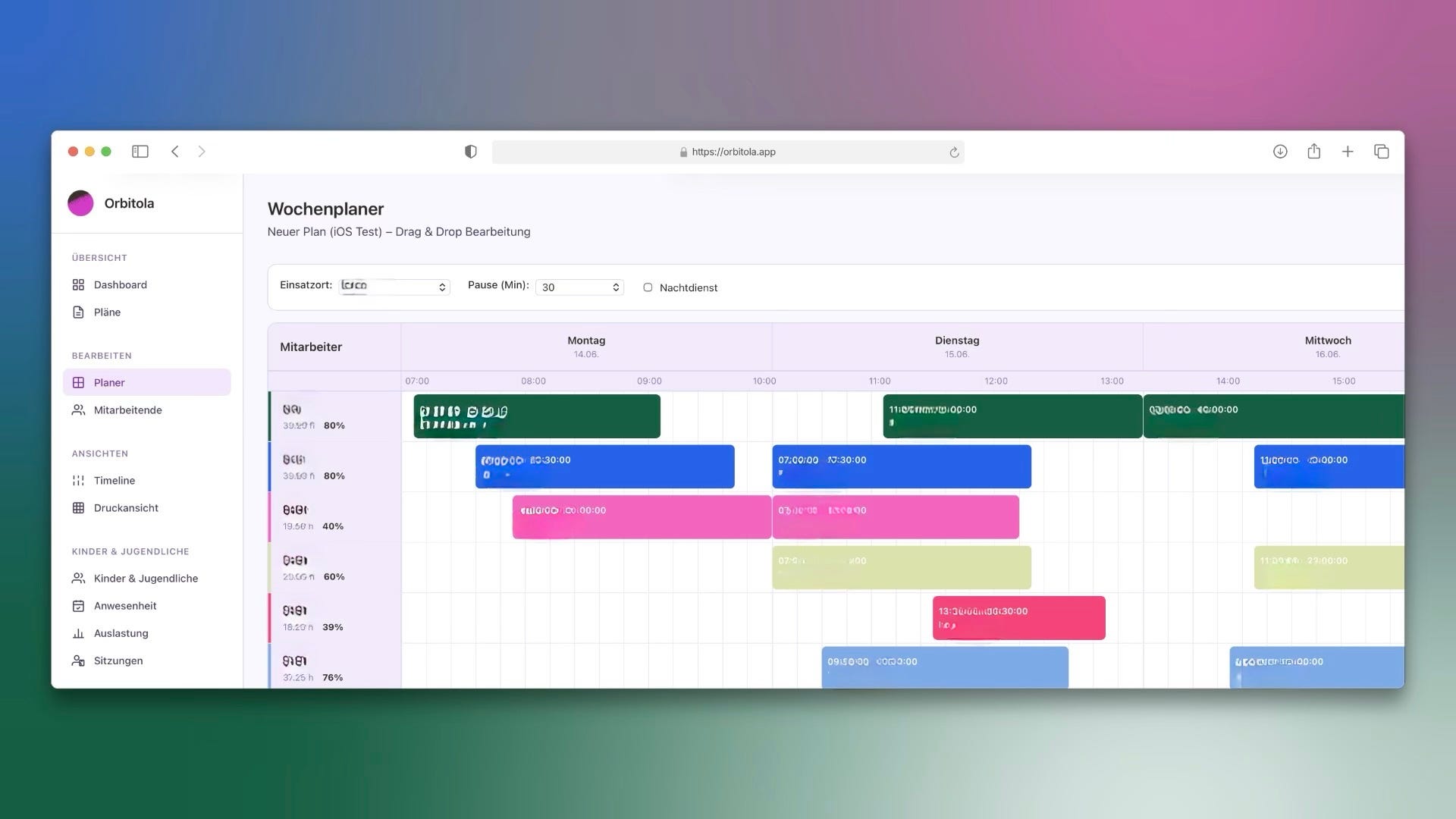
Many of my projects start with exactly these kinds of observations. One example is Orbitola (only available in german for now), a shift planning tool I have been developing recently. The idea did not come from a desire to build a software product. It came from noticing a real need. From seeing a process that could be simpler, clearer and more enjoyable for the people using it.
What fascinates me about Orbitola is not primarily the technology. Of course, building something is fun. Designing solutions is satisfying. But what interests me most is the thinking behind it. Observing a problem, understanding its roots and experimenting with possible solutions. In many ways, that feels surprisingly similar to the work I do professionally.
For a long time, I saw my interests as separate worlds. Social pedagogy on one side. Technology, creative projects and new ideas on the other. Today, I see much more overlap between them.
Both involve paying attention. Both involve understanding why something works or does not work. Both involve recognising opportunities and creating something new from them.
The more I reflect on my own professional development, the less interested I become in titles or traditional career paths. What interests me far more are the patterns that keep appearing. The themes that stay with me over the years. The kinds of problems I genuinely enjoy solving.
Personal growth, at least for me, is not about becoming someone completely different. It is about recognising what has been there all along. Taking recurring interests seriously. Paying attention to the things that naturally draw your attention. And having the courage to follow them.
One of those patterns in my life is curiosity. The desire to understand things better. To question systems. To experiment with new solutions. Sometimes that happens through conversations. Sometimes through projects like Orbitola. And sometimes it starts with a simple thought that refuses to leave my mind.
That is why my profession has become more than a job. It has become a place where new ideas emerge. A place where I not only support the development of others, but continue discovering new things about myself as well.